

Discovering the Island of the Gods
Welcome to the ultimate Jeju travel guide. Located just off the southern coast of South Korea, Jeju is a volcanic wonderland that has captured the hearts of honeymooners, nature enthusiasts, and foodies alike. Designated as a UNESCO World Heritage site, the island boasts a remarkably unique ecosystem, characterized by lush forests, cascading waterfalls, and striking lava tubes. The atmosphere here is distinctively more relaxed than the bustling mainland, offering a tranquil retreat characterized by fresh ocean breezes and a slower pace of life.
The island's unique geological history is visible at every turn. Formed by volcanic eruptions millions of years ago, Jeju's landscape is dominated by Hallasan, a dormant volcano that stands proudly at the center of the island. This majestic peak not only serves as a compass point for travelers but also provides some of the most rewarding hiking trails in East Asia. Beyond its physical beauty, Jeju is steeped in fascinating folklore and local legends, guarded by the iconic Dol Hareubang (stone grandfathers) statues that you will spot throughout your journey.
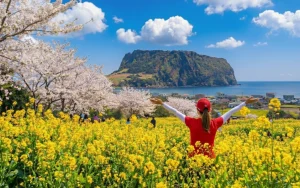
When considering the best time to visit Jeju, spring (March to May) and autumn (September to November) are widely considered ideal. Spring paints the island in vibrant hues of yellow canola flowers and delicate pink cherry blossoms, creating picture-perfect landscapes. Autumn brings mild weather, clear skies, and fields of silver eulalia grass that sway gracefully in the wind. Summer is perfect for beachgoers looking to enjoy water sports, while winter offers a quiet, moody charm with snow-capped peaks and the harvest of the island's famous sweet tangerines.
Top Attractions and Unforgettable Experiences
No trip to this island is complete without exploring the incredible natural attractions that make Jeju world-famous. Start your adventure at Seongsan Ilchulbong, also known as Sunrise Peak. This spectacular tuff cone crater rose from the sea in a volcanic eruption over 100,000 years ago. A relatively short but steep hike to the summit rewards early risers with one of the most magnificent sunrises on the planet. Afterward, head underground to explore the Manjanggul Cave, one of the finest lava tunnels in the world, where you can marvel at the otherworldly rock formations and the massive lava column at its end.
Beyond the dramatic geology, Jeju offers a pristine coastline dotted with breathtaking beaches. Hyeopjae Beach and Geumneung Beach on the west coast are renowned for their powdery white sand, cobalt-blue waters, and stunning views of nearby Biyangdo Island. For a more vibrant atmosphere, Jungmun Saekdal Beach in the south is a hotspot for surfers and luxury resort-goers. Nature lovers should also make time for the Jeongbang Waterfall, the only waterfall in Asia that falls directly into the ocean, providing a spectacular photo opportunity against the backdrop of the sea.
Immersing yourself in the local culture and culinary scene is an absolute must. Jeju is famous for its Haenyeo, the incredible female deep-sea divers who harvest seafood without the use of breathing equipment. You can watch their daily demonstrations and even taste their fresh catch right by the shore. When it comes to food, you cannot leave without trying Heukdwaeji, the island's famous black pork, traditionally grilled to perfection over charcoal. Pair this with a refreshing hallabong (local tangerine) juice or a bowl of abalone porridge to truly experience the authentic flavors of Jeju.
Essential Tips for Navigating Jeju
Reaching Jeju is incredibly convenient, primarily via Jeju International Airport, which handles one of the busiest flight routes in the world from Seoul's Gimpo Airport. Flights are frequent, short, and generally affordable. Alternatively, adventurous travelers can take a scenic ferry ride from mainland ports like Busan or Mokpo. International visitors will be pleased to know that Jeju operates a special visa-free entry program for many nationalities, making it exceptionally accessible for a spontaneous island getaway.
Getting around Jeju requires a bit of planning, as the island is larger than many visitors expect. Renting a car is undoubtedly the most efficient way to explore, giving you the freedom to discover hidden coastal roads and remote cafes at your own pace. Keep in mind that an International Driving Permit (IDP) is strictly required for foreign drivers. If you prefer not to drive, Jeju has a comprehensive public bus system that connects major tourist hubs, though travel times can be lengthy. Taxis are also readily available and can be hired for full-day private tours, which is a fantastic option for groups or families.
Safety on the island is generally excellent, reflecting South Korea's high overall safety standards. However, travelers should be mindful of the weather, especially during the summer typhoon season (July to September), which can bring heavy rains and strong winds. When preparing for your trip, keep these quick tips in mind:
- Currency: South Korean Won (KRW). Cards are widely accepted.
- Connectivity: Rent a portable Wi-Fi or buy a local SIM card at the airport.
- Navigation: Download local map applications, as international mapping apps have limited functionality in South Korea.
Frequently Asked Questions
How many days do I need to fully explore Jeju?
To truly appreciate the diverse landscapes, beaches, and cultural sites, a minimum of 3 to 4 full days is highly recommended. This allows you enough time to explore the eastern, western, and southern regions of the island without feeling rushed.
Is it necessary to rent a car in Jeju?
While not strictly necessary, renting a car is highly recommended. It provides the flexibility to visit off-the-beaten-path locations and saves a significant amount of transit time compared to using the public bus system.
What should I pack for a trip to Jeju?
Packing depends on the season, but layering is key due to unpredictable island winds. Always bring sturdy walking or hiking shoes for the trails, a light windbreaker, swimwear if visiting in summer, and sun protection year-round.